Jackson Clayton

Super Golf: Band Land
This was the studio’s final team project, where I owned the music-themed course, driving its level design, custom mechanics, and visual systems to deliver a cohesive, polished gameplay experience.
Responsibilities:
-
Worldbuilding
-
Level Design
-
Gameplay Design
-
Design Documentation


Barnyard Games
Barnyard Games was founded by developers who had worked on major titles like Borderlands and EverQuest II. With $3.4M in funding behind the studio, the goal was to create the next generation of UGC games by bringing AAA design standards into the creator space.
I joined the team in July 2024 and actively sought mentorship from the developers around me, it became one of the most valuable learning experiences of my career in game development. The studio's collaborative culture and high standards drove me to grow rapidly as a designer and a problem solver.
We worked on all different types of projects but the leads were very passionate about golf games, and had a proven track record of making successful Golf Games on the platform, so when they asked me to lead development on a full world for Super Golf, their largest project yet, I took it as a huge vote of confidence. I handled the project from start to finish, using everything I’d learned to deliver something the whole team could be proud of.
Pre-Production
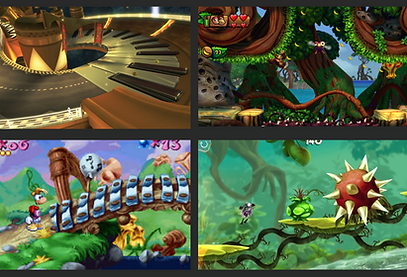
Gathering References
I researched golf and rhythm games to merge skill-based physics with musical feedback, defining the experience’s tone and pacing.
Working with the Head of Creative Vision, I prototyped interactive subwoofers that propel the ball and trigger musical notes, defining the course’s core mechanic.
I pitched a “progressive soundtrack” system that evolved per hole but shifted to visual-music feedback for clarity, while early blockouts focused on sightlines and flow to guide player navigation.


Initial Floorplans
During blockout, I refined geometry based on playtesting to improve clarity and flow.
For Course 2, I reworked the layout so players could see the full ball trajectory from tee to hole, making shots more rewarding.
Course 5 was opened up to support alternate routes and trick-shots with subwoofers, adding variety and replayability.
Course 9 combined all mechanics into a finale featuring long arcs, high bounces, and layered musical cues for a satisfying climax.
Blockout Process
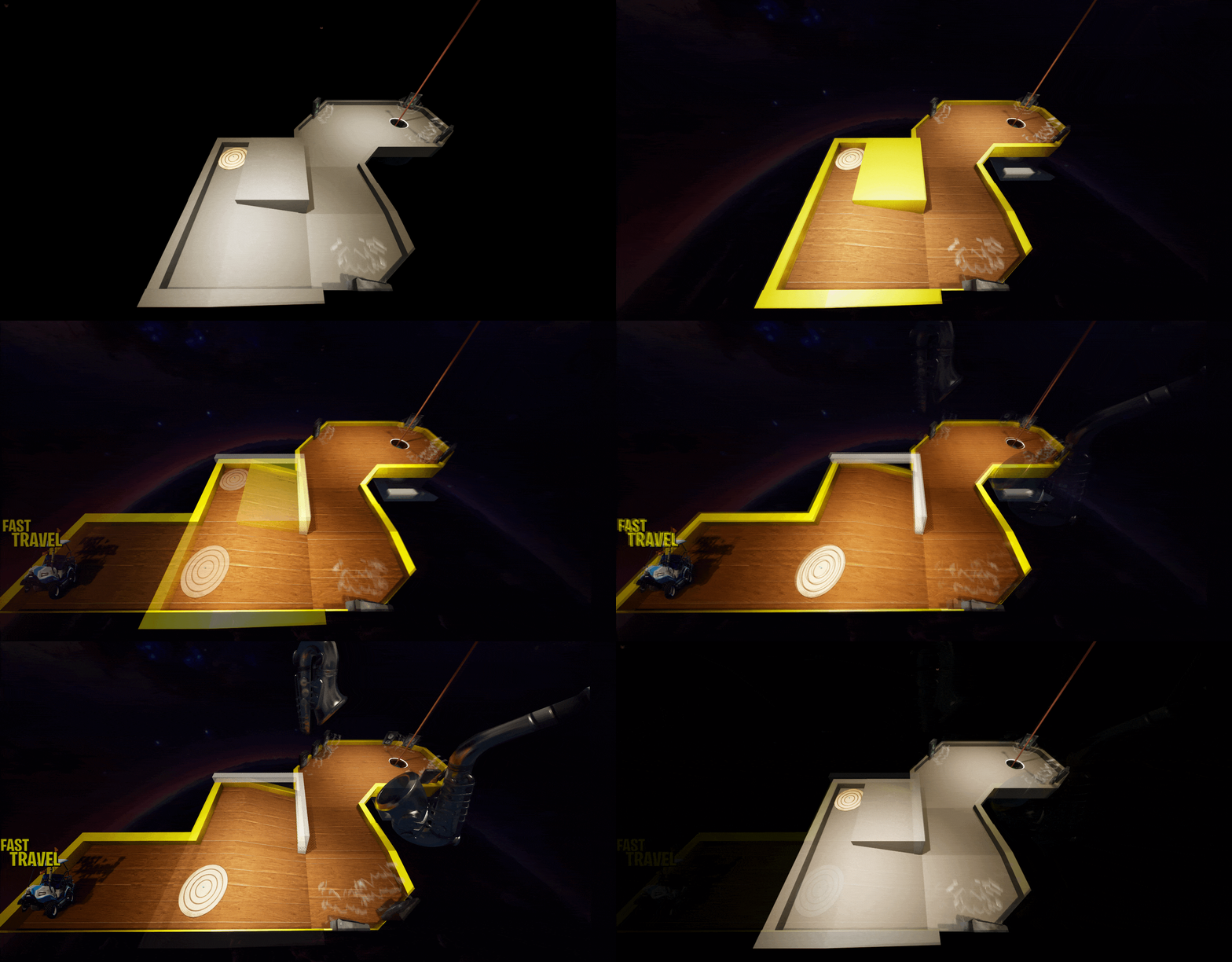
Course 2
My producer relayed playtester feedback that they weren't satisfied not seeing the ball reach the hole from the tee. It reduced the reward for a hole in one, I reworked the geometry to keep clear sightlines from tee to hole. This is a hole that was significantly improved by it.
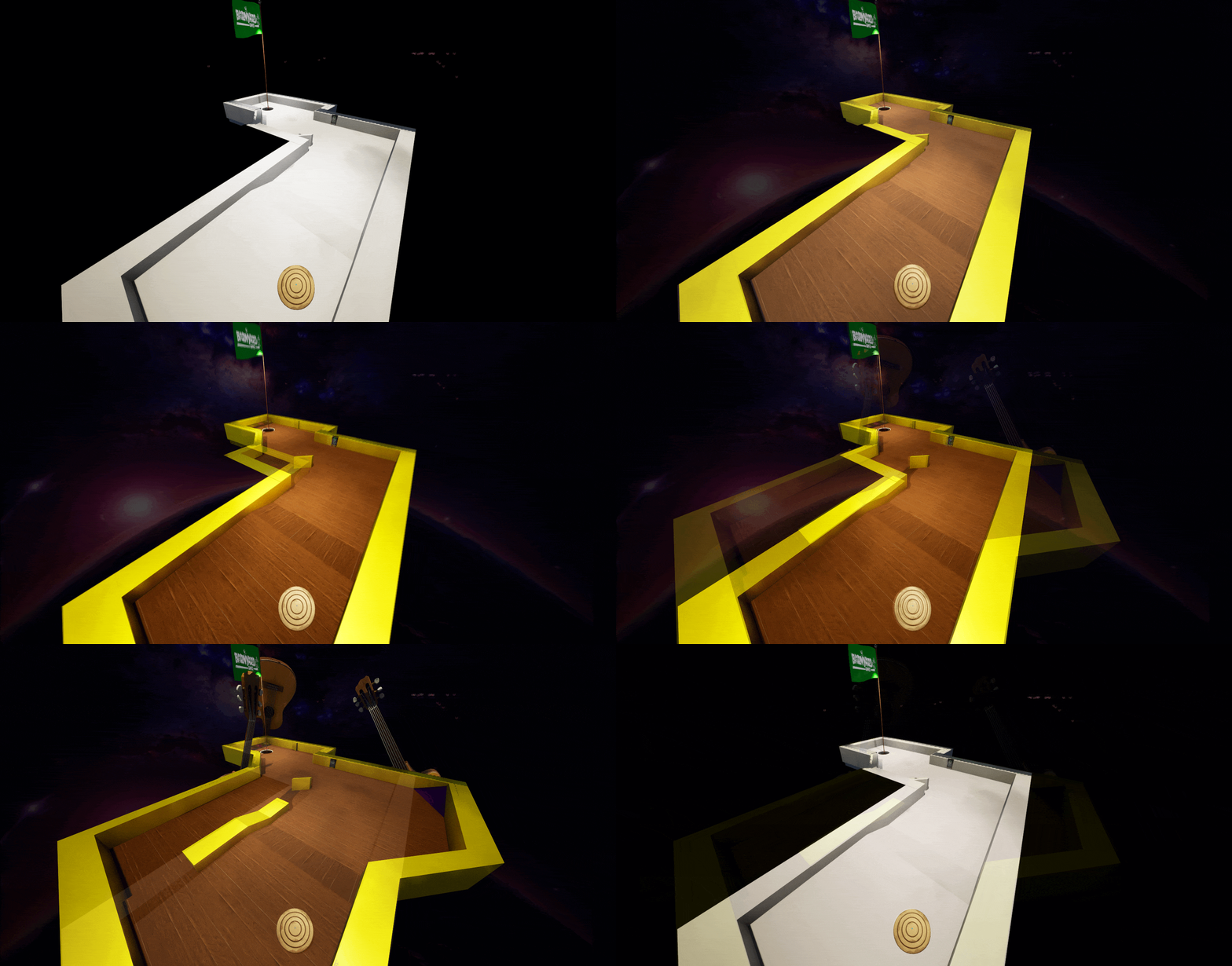
Course 5
This course has a clear path for players that want to use subwoofers, but there's alternate routes that reward creative players with a few other hole in one opportunities. I opened up the level design here to support these strategies, which was well received during playtesting.
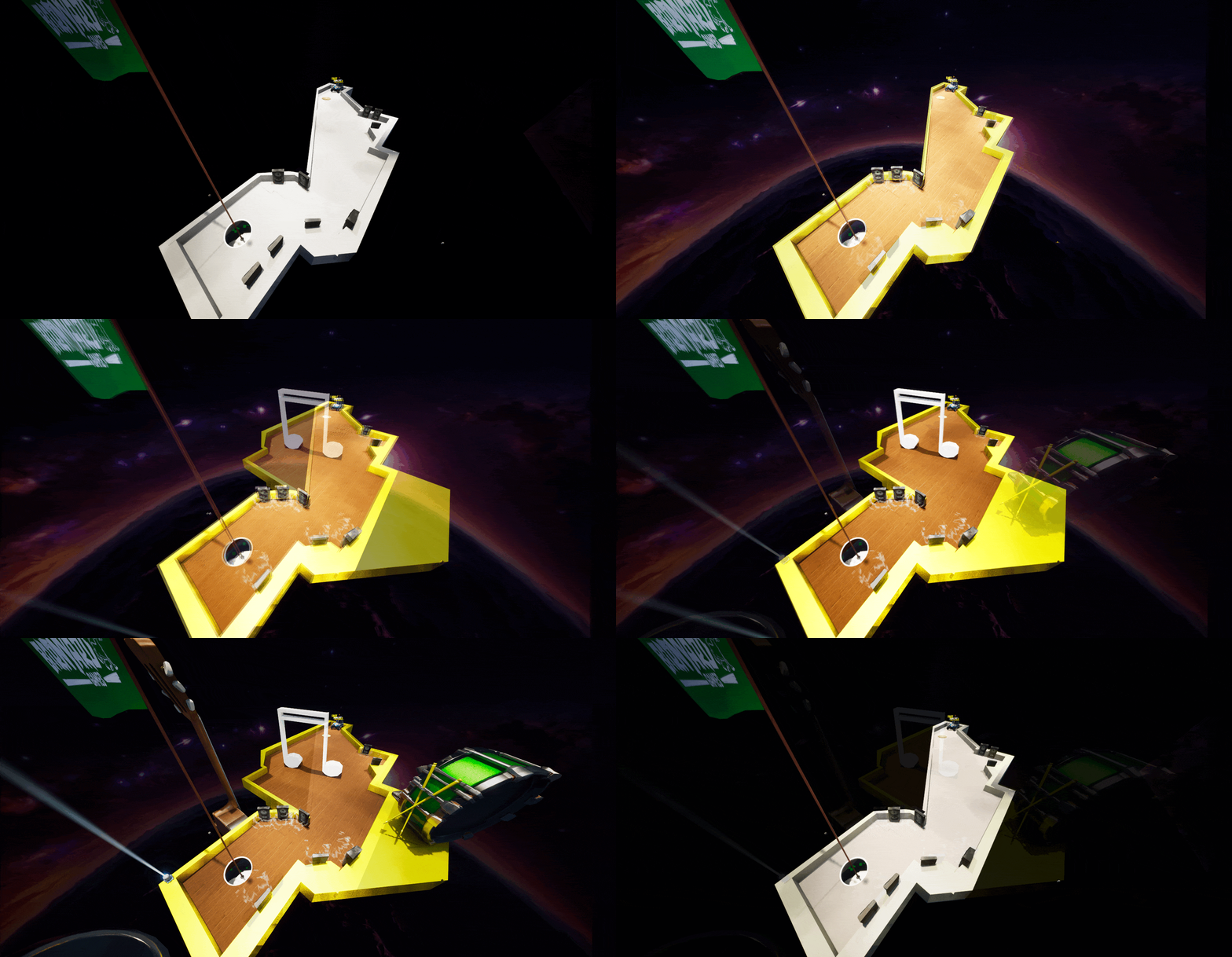
Course 9
This hole is meant to combine the mechanics into an exciting climax, with long ball trajectories, high bounces, and a tense final moment where the ball narrowly makes it into the hole. I also include all the instruments from previous levels to help tie everything together.
Design Choices
Mechanic Introduction
When designing the levels, I made sure the early holes were as readable as possible so players naturally figure out the music mechanics in this world through observation instead of direct tutorials.
Difficulty Curve
I balanced the challenging holes with easier "breather" ones to sustain player engagement while still having the overall world's difficulty curve increase over time. This really stuck with the testers and helped the world feel always engaging to the players.
Reward Paths
The main mechanic of this world is that I've linked precision shots to ascending musical notes, in a way that plays a cohesive theme to give a very satisfying feedback loop for hitting a shot right.
Precision Tuning
I added in a custom subwoofer object custom to this world, it's able to launch the ball in a set direction to help make shots easier to bounce without needing the perfect angle.
Travel Distance
As you progress from course to course, the distance the ball travels between bounces goes further and further, most of them are using launch pads to launch them at a set speed behind the scenes, but it makes it more dramatic from the player's perspective.
Visual Rhythm
Used lighting and prop placement to subtly guide player aim and movement flow, matching the rhythm of the soundtrack. This helped players anticipate bounce timing and maintain a smooth, readable play cadence across each hole.